
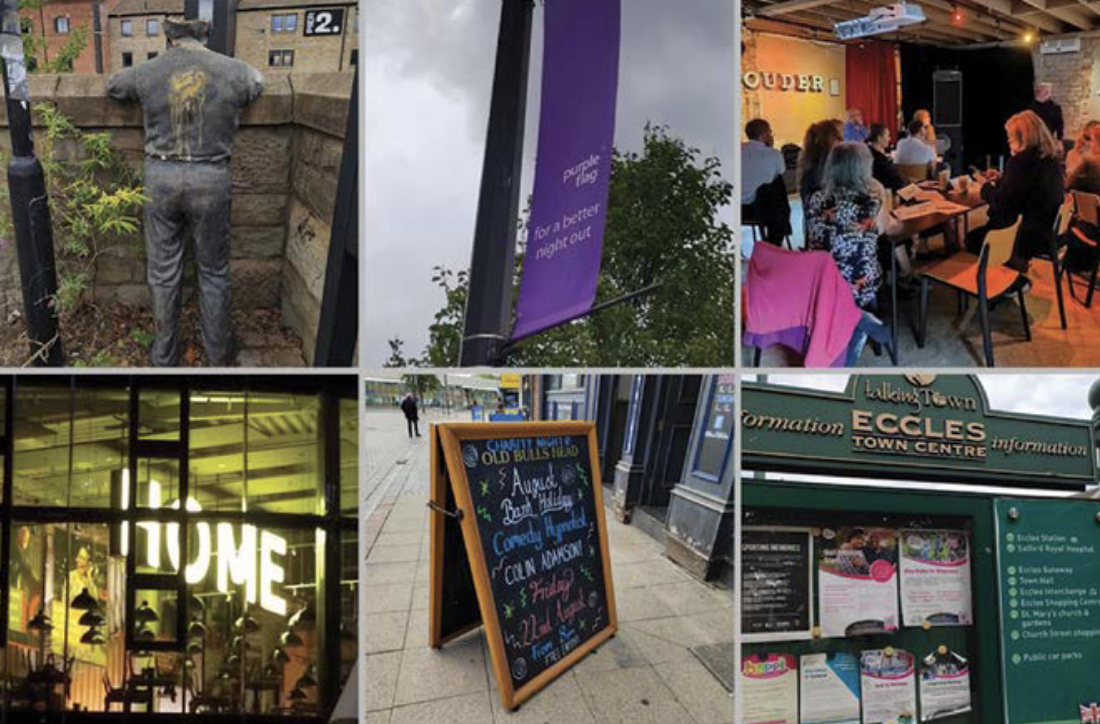
A new ILC and Greater Manchester Combined Authority report calls for later libraries open schools and a “Too Good to Miss” App to make evenings accessible affordable and age friendly.
With more of us living long lives, fewer young people to sustain nightclubs, and a cost-of-living bite, new research finds that the night time economy could better drive economic growth if the offer was more inclusive of all ages.
The International Longevity Centre’s (ILC) report, Dusk to dawn – creating a night time economy for all in Greater Manchester, highlights that consumers aged 50 and over spend £5.8 billion a year on food, retail, culture, hospitality and leisure across the region. It also reveals that a third of Greater Manchester’s workforce – nearly half a million people – depend on the night time economy.
Greater Manchester could boost its economy, support good jobs and strengthen communities by making its night-time economy work better for all ages. The report highlights that Manchester has a great night time offer, but provision is patchy in other parts of the city region – and too many people are put off going out by transport gaps, safety concerns and a lack of inclusive venues.
The strength of home entertainment means that people of all ages are more discerning than ever before and want added value when they go out. But it remains true that most people simply want safe and comfortable spaces to connect and spend time with friends or make new ones.
ILC’s comprehensive report calls on national and local government, businesses and communities to pilot seven practical prototypes which could help boost participation and spending, including “The Square Deal” (bundled food, entertainment and transport offers), a “Too Good to Miss” App, and “Friends for the night” (intergenerational gig buddies).
The authors argue that national government has a role to support the night time economy to thrive. Better data and closer links between nightlife, crime prevention and health strategies could help boost growth. ILC argue for tax relief for accessible venues and urge the UK Government to consider the case for daylight saving reform, pointing out that “lighter later” could drive early evening footfall.
The report also suggests the repurposing of public buildings such as schools and faith centres. Enabling the wider use of schools in the evenings, at weekends and during the holidays could add over two million extra community hours a year or 168 hours a week, creating low-cost evening spaces for all generations.
David Sinclair, Chief Executive, International Longevity Centre commented: “The night time offer in parts of Greater Manchester is world class – but in other parts, it is not, and it needs to evolve. With an ageing population, we can’t rely on young people alone to keep our bars, venues and restaurants flourishing.
“This isn’t about partying all night – it’s about creating reasons to stay out, connect and belong. As we get older, we don’t necessarily want early nights – we want better nights. Older people in Oldham or Bolton shouldn’t have to head into Manchester city centre for a safe, fun night out – so the offer needs to be consistent across the region.”
Cllr Bev Craig, Leader of Manchester City Council and Greater Manchester Combined Authority portfolio lead for Economy, Business & Inclusive Growth said: “Greater Manchester’s night time economy is one of its greatest assets. By unlocking the spending power of older residents and creating spaces where everyone feels safe and connected, we can ensure all our residents and visitors live well at night.
“Designing nightlife around health, inclusion and accessibility doesn’t just make social sense, it makes economic sense too.”


