
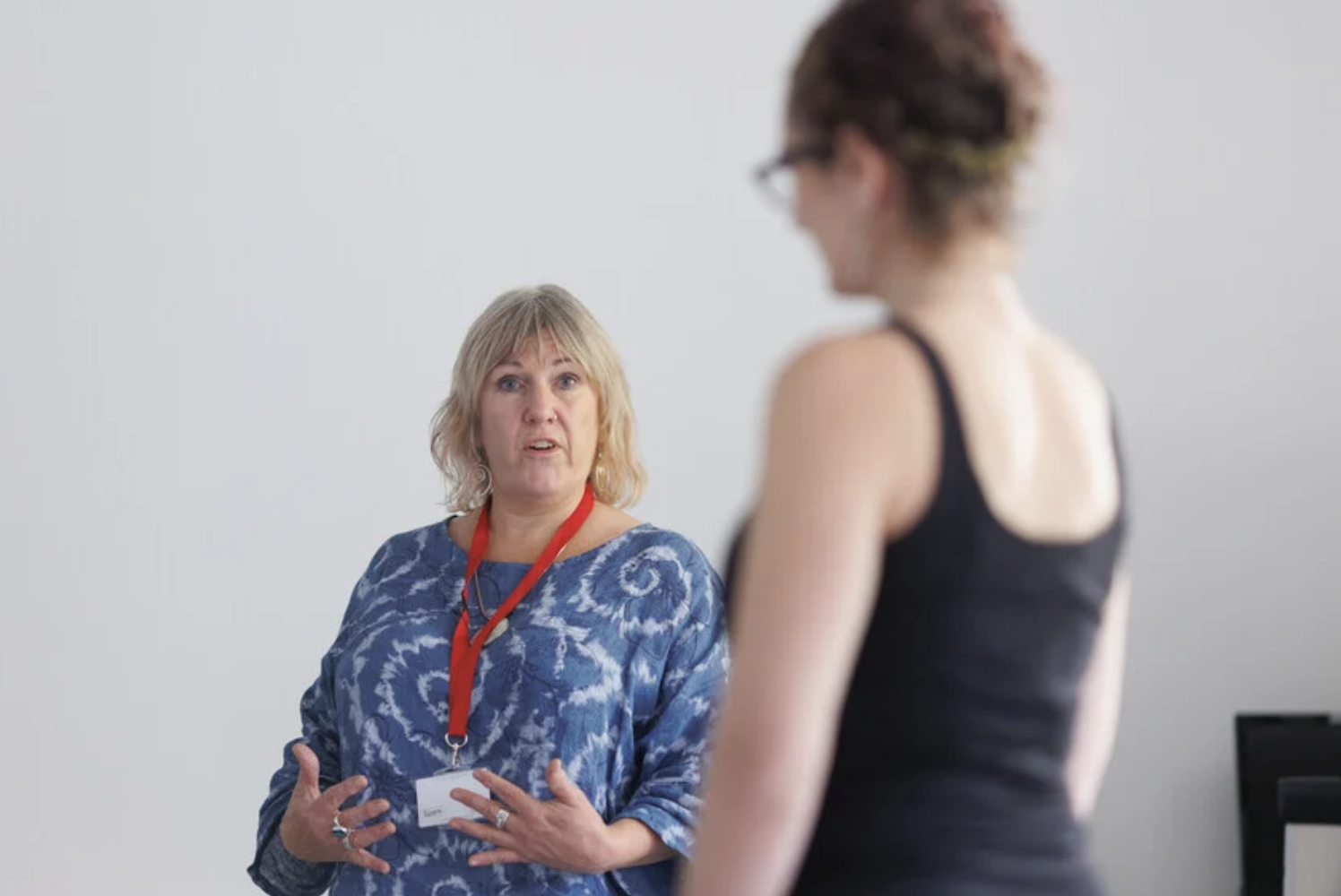
Michele Dennison of ProAge, in conversation with Dr. Tatiana Rowson for International Women’s Day, on the “The Midlife Advantage”.
There’s a quiet but powerful shift happening in how we think about age, gender and work. For years, midlife women have been framed through a deficit lens – a stage marked by menopause, caring responsibilities, declining visibility or narrowing career opportunities.
But what if this narrative overlooks something essential and we are missing the strengths that women in midlife have been cultivating their entire adult lives? What if the very experiences we’re taught to see as barriers – hormone shifts, role changes, reinventions – are in fact the source of women’s greatest workplace superpower?
This was the question that began to take shape during my conversation with Dr Tatiana Rowson, academic, psychologist, coach and one of the UK’s most insightful voices on ageing, identity and sustainable working lives.
What emerged between us was not a story about decline or fading, but about capability and evolution and the cognitive and emotional advantages that midlife women uniquely bring to the future of work.
“Women have built that muscle,” Tatiana told me matter‑of‑factly. “We just need to exercise it a bit, and we’ll find it can be done.”
That “muscle” it turns out is the skill of transition: shifting roles, identities, energies, relationships and expectations; often simultaneously. And in a world where work is becoming more fluid, less linear and more complex, this capacity is not just useful, it is indispensable.
A Life Defined by Transitions
Tatiana has been studying midlife for more than twenty‑five years. When she first began her research in the 1990s, she told me, everyone in psychology around her was focused on children.
“I was a bit contrary,” she laughed. “Child psychology was so well catered for. I wanted to know what happens in midlife.”
What she discovered was a kind of hidden architecture of transition that shapes women’s lives. Unlike the traditional masculine career arc based around a single identity, upward mobility, uninterrupted participation, women’s trajectories tend to be cyclical and adaptive.
“You are ‘girlified’ until quite a lot later,” she explained. “And then the world starts seeing you as ‘older’ a lot earlier.”
“You are ‘girlified’ until quite a lot later in life. And then the world starts seeing you as ‘older’ a lot earlier.”
Between those two bookends lies a lifetime of recalibration: returning to work after having children; managing caring responsibilities; renegotiating identity in male‑dominated spaces; shifting roles at home and in the community; adapting to hormonal patterns and fluctuations; absorbing the psychological load of expectation and stereotype.
“We negotiate different roles constantly,” she said. “That means the muscle is there.”
This is not a small point. In psychology, the ability to adapt one’s thinking, behaviour and identity to new circumstances is called cognitive flexibility. And while it’s often discussed as an abstract trait, Tatiana describes it as something women actively practice – repeatedly, intuitively and often invisibly – across their life course.
This makes midlife not a moment of unraveling, but a moment of consolidation. Women stepping into their 50s, 60s and beyond are not arriving depleted; they are arriving experienced.
Misunderstood Strengths: How Workplaces Misread Midlife Women
And yet, despite this deep adaptability, women commonly experience something very different at work – gendered ageism. The combined effect of sexism and age bias still shapes many organisational cultures in subtle but pervasive way.
“Women get interrupted,” Tatiana said. “Their contributions are downplayed. Their views dismissed.”
She’s heard countless stories from women in midlife who find themselves suddenly overlooked, not because they have stepped back, but because the workplace has quietly stepped away from them. They move, in Tatiana’s words, from “leadership potential” to “past it” without ever having had the opportunity to reach the leadership stage at all.
“You can stay at work and just be forgotten,” she said. “You reach a point where you’re no longer perceived as having what it takes….men can be seen as wise as they age… where women might be seen as ‘granny’. And they might well be grandmothers in their personal life, but they’re still very capable professionals.”
This isn’t only true in senior roles. In retail, hospitality, education, healthcare, manufacturing, in fact wherever women work in large numbers the same pattern appears. Older women report not being listened to in meetings, not being included in key decisions, or being vaguely perceived as “less current” than their younger colleagues.
These subtle forms of bias have a cumulative effect: they erode confidence, reduce visibility and quietly push women to the margins. But what’s often misinterpreted as withdrawal is more accurately a protective instinct; a response to environments that fail to recognise the deep expertise and flexibility women have cultivated over time.
The Loneliness of Being “The Only One”
One of the most striking insights Tatiana shared with me, and which I haven’t seen widely discussed, is the visibility vs invisibility paradox and the experience of being the only woman of a certain age in a team and the. Women become invisible in midlife – dismissed, interrupted, undervalued. Yet, when they’re the only midlife woman in a team, they feel hyper‑visible, scrutinised, or centre-stage.
“Not having other women of the same age was often a problem,” she explained. “You really stand out. It puts a spotlight on you.”
In this situation, the challenge isn’t menopause itself. It’s the absence of shared understanding. A woman navigating a difficult day – whether due to night sweats, disturbed sleep, anxiety spikes or simply a period of emotional or cognitive fog – handles it very differently when surrounded by peers who understand or at least recognise what she’s going through. Without those peers the instinct is often to retreat.
“Women are not withdrawing because of weakness – they are withdrawing because the space around them has become inhospitable.”
“Women slowly start to hide,” Tatiana said. “It becomes a self‑fulfilling prophecy. And it’s easy to say it’s ‘their choice’, but actually it’s the system facilitating that choice.”
This is an essential insight: women are not withdrawing because of weakness – they are withdrawing because the space around them has become inhospitable.
Belonging is a psychological condition, not a demographic fact. You can have a workforce full of women and still leave midlife women feeling isolated.
Reinventing, Reclaiming, Re‑Encountering Self
Despite these structural pressures, Tatiana’s work reveals something far more hopeful happening beneath the surface: midlife reinvention.
Midlife, she told me, is a moment when many women “meet their true selves again.”
“One woman said she put all her suits in a bag and got rid of them,” Tatiana recalled. “She realised she’d been complying with an expectation that wasn’t her. Midlife was a moment of rediscovering who she really was.”
It’s a vivid and surprisingly common story. Women describe shedding old clothing, old roles, old ways of being. Some leave long-standing jobs to pursue careers that align more closely with who they are now. Others set firmer boundaries, pursue long-stifled ambitions or renegotiate relationships and responsibilities.
What looks like reinvention is really reclaiming: a return to self after decades of adaptation.
And this is where Tatiana’s most powerful argument emerges: this identity shift is not a liability for organisations, rather, it is a strategic advantage.
Women in midlife often bring:
• clarity of purpose
• emotional maturity
• stronger boundaries
• willingness to challenge norms
• capacity to lead through ambiguity
• connection across generations
• deep understanding of adaptation
These are not soft skills. They are the mindset tools organisations desperately need in a world defined by complexity and change.
But, you might be thinking, this applies to men too. The difference: careers will look more like women’s lives have always looked. Women who have returned after maternity leave, navigated caring responsibilities, or walked a squiggly work/life path are already living the model of future‑ready careers.
Tatiana put it beautifully: “Women encounter themselves again at midlife. It’s extremely powerful.”
Their lived experience positions them as natural guides in a workplace landscape that is increasingly built around adaptability rather than straight lines
The Future of Work Is Non‑Linear and Women Have Been Modelling That All Along
Tatiana’s most future‑focused insight relates to career structures. The traditional “career ladder” was built for a world of shorter lives, clearer gender roles and more predictable employment. But it no longer maps onto reality.
“Work isn’t going to stretch the same way,” she told me. “The idea of a career ladder – where does it even end? It’s not realistic.”
Increasingly, careers will require:
• lateral moves
• career breaks
• identity shifts
• multi‑stage development
• re‑skilling and re‑learning
• portfolio work
• cyclical progression
• transitions in and out of roles
What Organisations Can Do: The Subtle Work of Changing Culture
So, what can organisations do to recognise and leverage this midlife advantage?
Tatiana believes the answer lies not in grand gestures but in subtle, structural shifts.
1. Equip line managers – they are the hinge of inclusion
“Good line managers notice,” she said. “They bring people back in. They ask questions. We don’t know the talent we have unless we ask.”
Line managers shape day‑to‑day experience more than any policy ever will.
They can:
• create space for midlife conversations
• support flexible transitions
• recognise subtle signs of bias
• invite contribution rather than waiting for it
• champion internal mobility
2. Normalise non‑linear careers
This means celebrating sideways moves, recognising cyclical ambition and understanding that reinvention is a sign of strength, not instability.
“Individuals need to be more open to recalibrating”, Tatiana said. “And organisations need to make that possible without judgement.”
3. Create purposeful intergenerational teams.
Avoiding the “only one” phenomenon requires thoughtful team design. Diversity is not just gender or ethnicity – age diversity is equally transformative and well-functioning teams that are intergenerational by design are more productive.
4. Re-think Value.
Not every contribution looks like hierarchical progression. Organisations must broaden their understanding of what value looks like – knowledge, mentorship, stability, creativity, insight – recognise and reward it accordingly.
5. Support reinvention before it requires an exit.
Women should not have to leave an organisation to find work that fits their evolving identity. Internal mobility, role redesign and open dialogue can keep experienced, capable women in the system.
A New Narrative for Midlife Women, and for Work Itself
Near the end of our conversation, I asked Tatiana what she most wished organisations understood about women in this life stage. She paused for a moment before responding.
“Belonging boosts our cognition,” she said thoughtfully. “And then we can expand, be creative, use our full capacity.”
Her second point was more personal – and perhaps more radical.
“You have to say: I know the expectations. But I don’t want to comply with them. I want to be myself.”
This invitation to step into one’s truest identity is more than a personal milestone. It is a powerful organisational asset weaving innovation, psychological safety and leadership together.
Women in midlife are not looking to be rescued or “supported” as a special category. They are looking to be seen – seen for their adaptability, their insight, their capacity to hold complexity, and their ability to lead others through transition.
And if organisations can truly see that then the entire narrative of ageing at work shifts, because the future of work will not be built on linearity, conformity or rigidity. It will be built on flexibility, reinvention, connection and courage.
Women in midlife have spent a lifetime developing exactly that. Perhaps the most remarkable thing about the midlife advantage is that it isn’t new at all. It’s been here all along, quietly shaping families, organisations, communities and society.
So, this International Women’s Day maybe it’s time we recognised it and built the future of work around it.
This article was first published on the ProAge website: https://www.proage.org/gendered-ageism
About Tatiana Rowson:
Dr. Tatiana Rowson is an Associate Professor at Henley Business School, University of Reading. With a background in organisational psychology and leadership development she is one of the UK’s most insightful voices on ageing, identity and sustainable working lives. A well respected academic, author, and keynote speaker on multigenerational leadership and career longevity she recently published “Personal Leadership in the Age of No Retirement” which offers a practical, evidence-based approach to help individuals recalibrate their futures and embrace longevity with clarity and purpose.
About the author, Michèle Dennison:
Michèle Dennison is a future of work strategist, age inclusion advocate and storyteller. She explores the challenges of demographic change and longer working lives. She partners with individuals and organisations to redesign work, support longer careers and strengthen intergenerational connection across workplaces and communities.


