
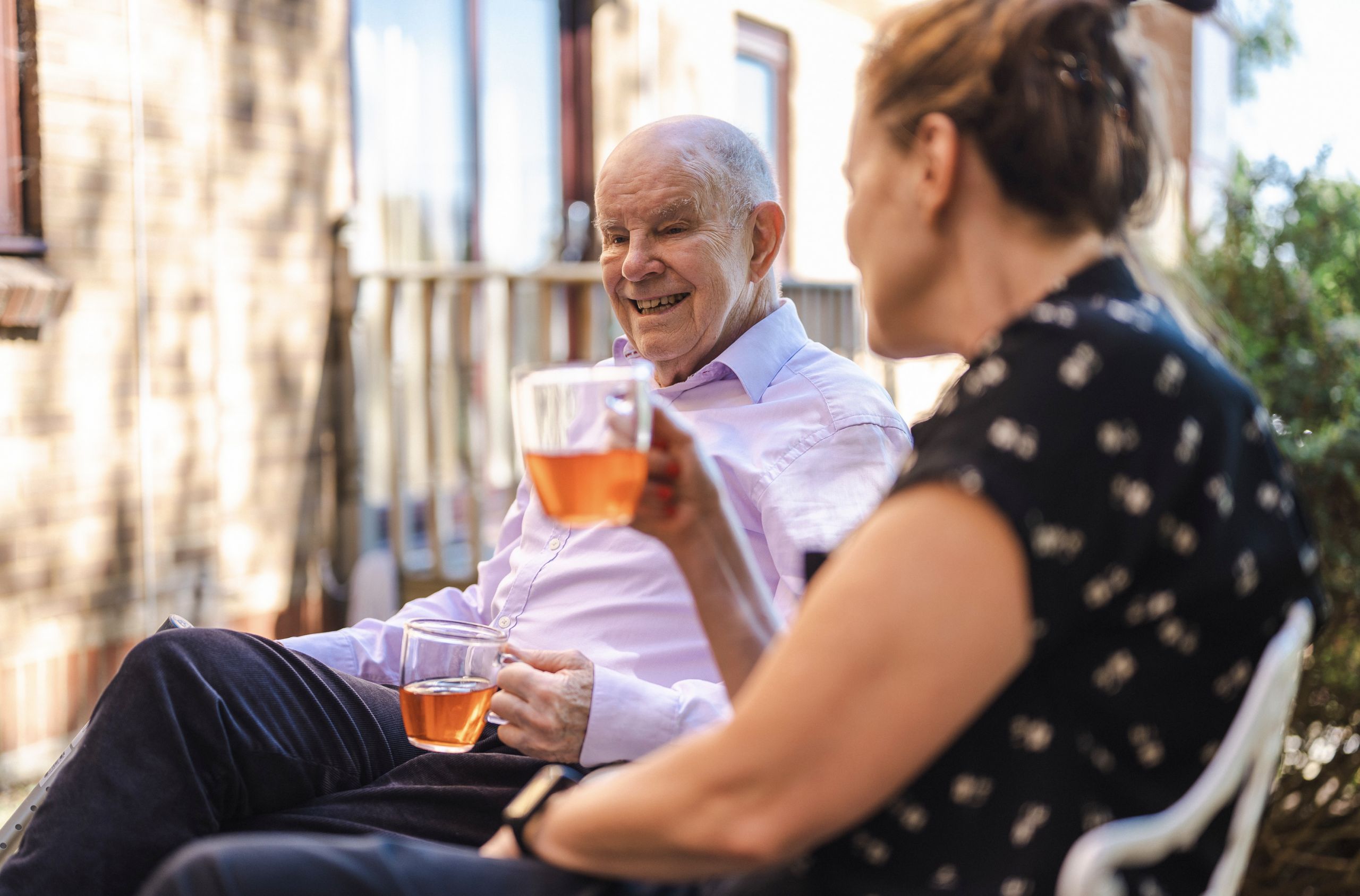
Britain faces two growing crises: loneliness and housing. Now a new survey points to ways in which both problems could be tackled by the generations working together to develop solutions that work for all ages – including multigenerational living.
Chronic loneliness is a problem for almost four million people in the UK[1] and the negative physical and psychological health impacts of loneliness are well established.
Loneliness is also not just an issue for older people: according to the Government’s own research, younger adults (16-29) are significantly more likely to report being lonely compared to older generations.[2]
Alongside that, millions of younger people are struggling with housing costs.
Today, at the start of Loneliness Awareness Week (15 – 21 June), a new survey has shed a potentially positive light on both crises.
The survey was conducted between the Age Action Alliance – the knowledge-sharing collaboration of more than 200 organisations working in the later life zone – the loneliness charity Re-engage and home share providers The Care Share Solution, and reveals that initiatives to rebuild the bridges between generations could make a meaningful difference.
These initiatives could include unlocking the 10 million “spare bedrooms” in the homes of older people.
The cross-generational survey was conducted in February 2026 by loneliness charity Re-engage and asked 355 people a series of questions about home sharing.
The results come just weeks after the All-Party Parliamentary Group (APPG) on Housing and Care for Older People concluded that blending housing for older people with homes for younger generations could help combat rising loneliness as well as address the UK’s chronic shortage of specialist housing.
Key findings from our survey include:
- Intergenerational connections appear to be a protective factor against loneliness and a “power tool” for wellbeing
- Just over two-thirds of respondents had experienced loneliness (68%), with bereavement most commonly cited as a trigger
- More than three-quarters of respondents said that spending time with people of different ages made them feel included and valued (77%)
- The biggest benefits of spending time with people from other generations were: learning; relationships; and community building
- This is a strong desire for connection, with 77% saying they would be willing to try “something new” but structural barriers currently make this difficult
- Confidence is a major factor too – older adults often need to be “invited” to activities
- A need for better transport was cited by 32% of older people as holding them back from taking part in activities
- Around a third of people said they would feel comfortable sharing their home with someone (30%) as a way to reduce isolation
Tony Watts OBE, Chair of the Age Action Alliance said:
“The research has proven what many of us have long argued. Loneliness is a cross-generational issue. Solving the problem needs to be an intergenerational effort too.
“A lot of the isolation we now see in society comes from families being less connected than they once were… but we all benefit from the company of people from different generations. What we need to take away from this survey is how to foster those relationships and break down the barriers that can prevent it from happening.
“The increasing physical fragmentation of families has led us to the point where many people simply don’t have that ‘intergenerational glue’ in their lives, and which has sustained society for millennia.
“We can’t turn the clock back on the fact that families no longer remain so physically close. But we can make our society a place where the generations are encouraged and enabled to come together more easily – through community building, housing solutions, shared learning activities and so on.
“This genuinely isn’t rocket science. And I’m confident that we are now pushing at an open door. More and more care homes are opening their doors to schools and playgroups. We are seeing intergenerational housing schemes where all generations benefit, and community projects where older people are passing on their skills and knowledge and feeling valued.
“Build on these beginnings and we start to eradicate one of the biggest causes of unhappiness and poor health in our country today.”
The project’s beginnings
The project was initiated by Joe Wells, co-founder of The Care Share Solution, which matches older homeowners with vetted home-sharers. Joe’s personal experience inspired the project.
When Joe’s mother developed dementia, she did not require full-time care – but she struggled with anxiety when alone. “Most of all she didn’t want to be alone at night,” Joe explains.
“That’s when her anxiety was at its worst. What she really needed was companionship and someone nearby for reassurance.”
Instead of moving her into care, Joe explored whether a younger person looking for affordable accommodation could live in the home and offer light support and companionship.
The arrangement worked. “It helped my mum feel safe, supported and connected again, he says. “At the same time, it helped someone younger access affordable housing. That’s when the idea for The Care Share Solution was born.”
The organisation now matches older homeowners with carefully vetted home-sharers, who live in the home and provide up to 15 hours of support each week in exchange for affordable accommodation.
“Across the UK, organisations are increasingly exploring intergenerational solutions – care homes are partnering with schools and nurseries, communities are coming together to share skills and the life experiences of older people.
“We hope this research will spark more such initiatives.”
Ben Diamond, co-founder of the Care Share Solution says the survey confirms the importance of this direction. “Intergenerational connections appear to be one of the most powerful protective factors against loneliness.
“When we bring the generations together, everyone gains.”
Ends
Image: Joe Wells, co-founder of The Care Share Solution, with his mum Sophia.
A white paper generated in connection with this research is linked below, with full details of the survey as well as interviews from leading names in the later life zone.
[1] https://www.campaigntoendloneliness.org/facts-and-statistics/
[2] https://www.gov.uk/government/statistics/community-life-survey-202324-annual-publication/community-life-survey-202324-loneliness-and-support-networks–2


